Guide · The Journal
What to see in Puglia:
What to see in Puglia:
12 places worth the journey
12 placesWhat to see
May – OctThe best season
2 seasAdriatic and Ionian
800 kmCoastline
Puglia is the heel of the Italian boot — a long strip of land between two seas, with white towns, olive groves and a kitchen that brings the Italians themselves here on holiday.
Conical stone houses, baroque carved from honey-coloured stone, towns cut into rock and caves you enter by boat. We have gathered the twelve places that make Puglia unlike anything else in Italy.
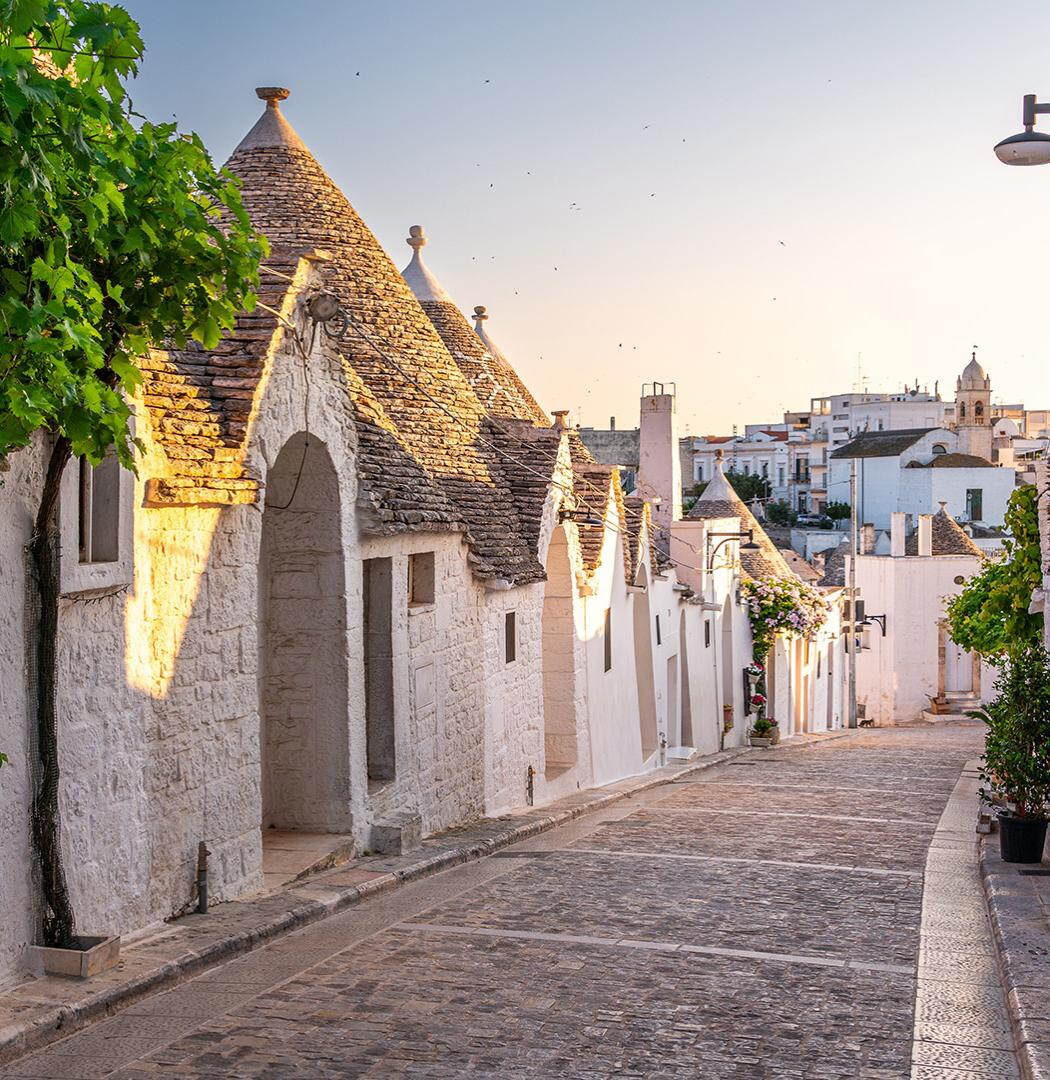
1. Alberobello
More than fifteen hundred trulli — white stone houses with conical roofs, built without mortar. The whole Rione Monti quarter is under UNESCO protection. It is quietest early in the morning, before the coaches arrive.
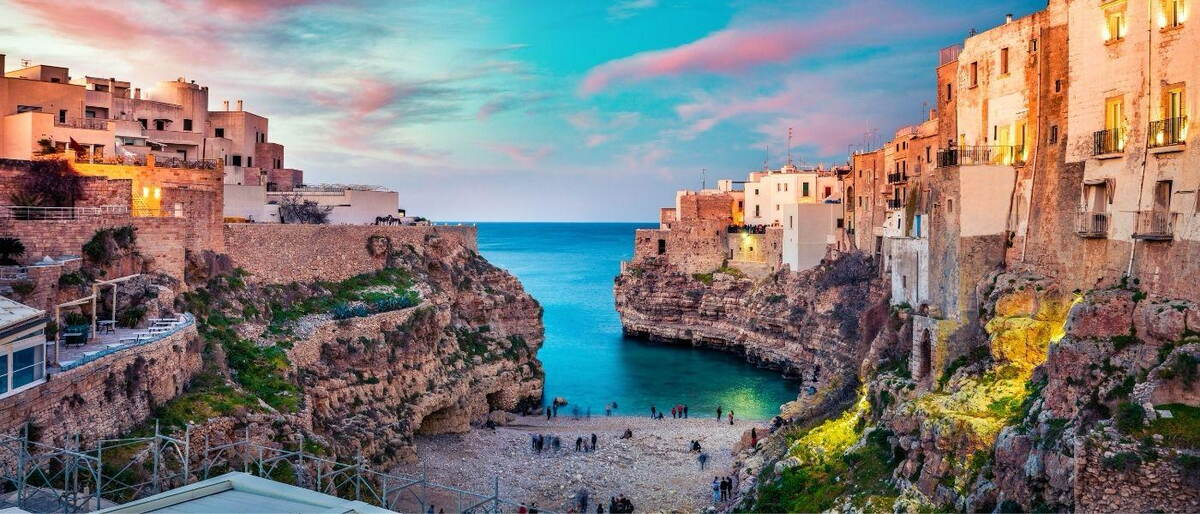
2. Polignano a Mare
A town perched on the edge of twenty-metre cliffs above the Adriatic. Between them lies Lama Monachile — a small pebble beach wedged into the very centre. The view from the terraces above it is the most photographed in Puglia.
3. Ostuni
The ‘White City’ — a whitewashed labyrinth on a hilltop, visible from afar above the olive groves. The streets wind upwards to the cathedral, and from the walls you look out to the sea.
4. Lecce
They call it the ‘Florence of the South’. The soft, honey-coloured local stone allows carving so fine that the church façades look like lace. The Basilica of Santa Croce is the finest example.
5. Matera
An hour from Bari, already in the neighbouring region of Basilicata. The Sassi — two quarters cut into the rock and inhabited for millennia — are under UNESCO protection. At sunset the stone city turns gold.
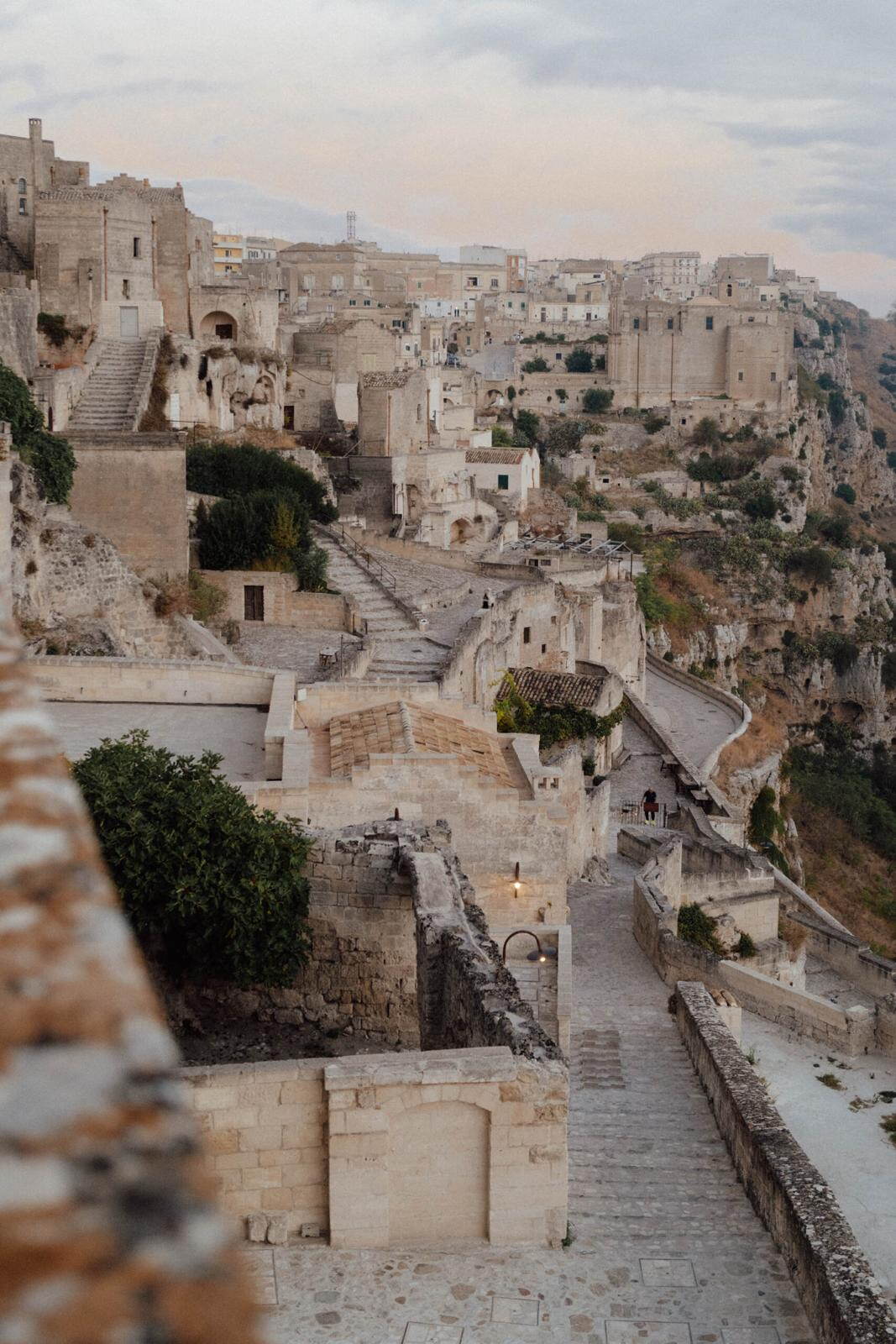
In Puglia stone is everywhere — white, golden, hollowed out.
6. Monopoli
An old harbour with blue fishing boats, a castle above the water and an old town where people still live. Less showy than neighbouring Polignano, and more real for exactly that reason.
7. Locorotondo and the Itria Valley
The valley of trulli, vineyards and dry-stone walls. Locorotondo is a round white town on a hill, with balconies heavy with flowers and a white wine of its own. Cisternino and Martina Franca are nearby.
8. Otranto
The easternmost town in Italy. The cathedral holds a twelfth-century mosaic floor — a tree of life covering the entire nave. Beyond the ramparts the water is rarely so clear.
9. Gallipoli
The old town stands on an island in the Ionian Sea, joined to the mainland by a bridge. A fish market, a castle and sunsets over the water — here the sun sets into the sea, unlike on the Adriatic coast.
10. The sea caves of Salento
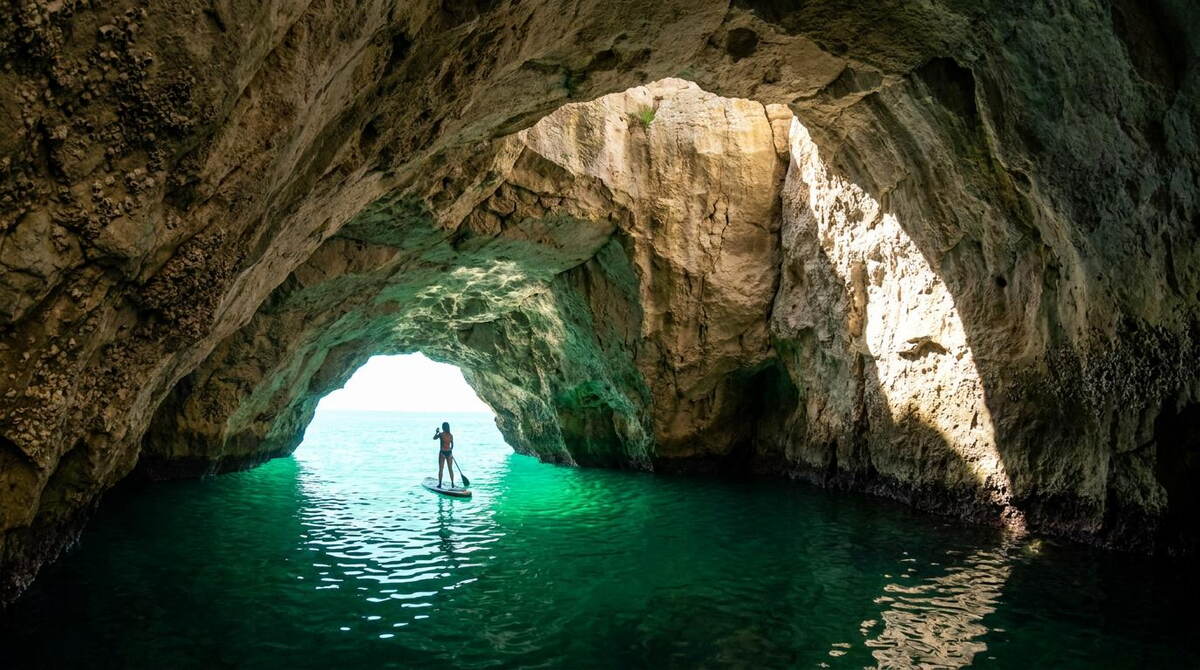
Along the rocky coast between Otranto and Santa Maria di Leuca the sea has hollowed out dozens of caves. You enter them by boat or on a paddleboard, and the light from below turns the water green. At Leuca the two seas meet.
11. Castel del Monte
The thirteenth-century octagonal castle of Frederick II stands alone on a hill and can be seen for miles. Nobody knows for certain why it was built. It appears on the Italian one-cent coin.
12. The masserie and the Puglian table
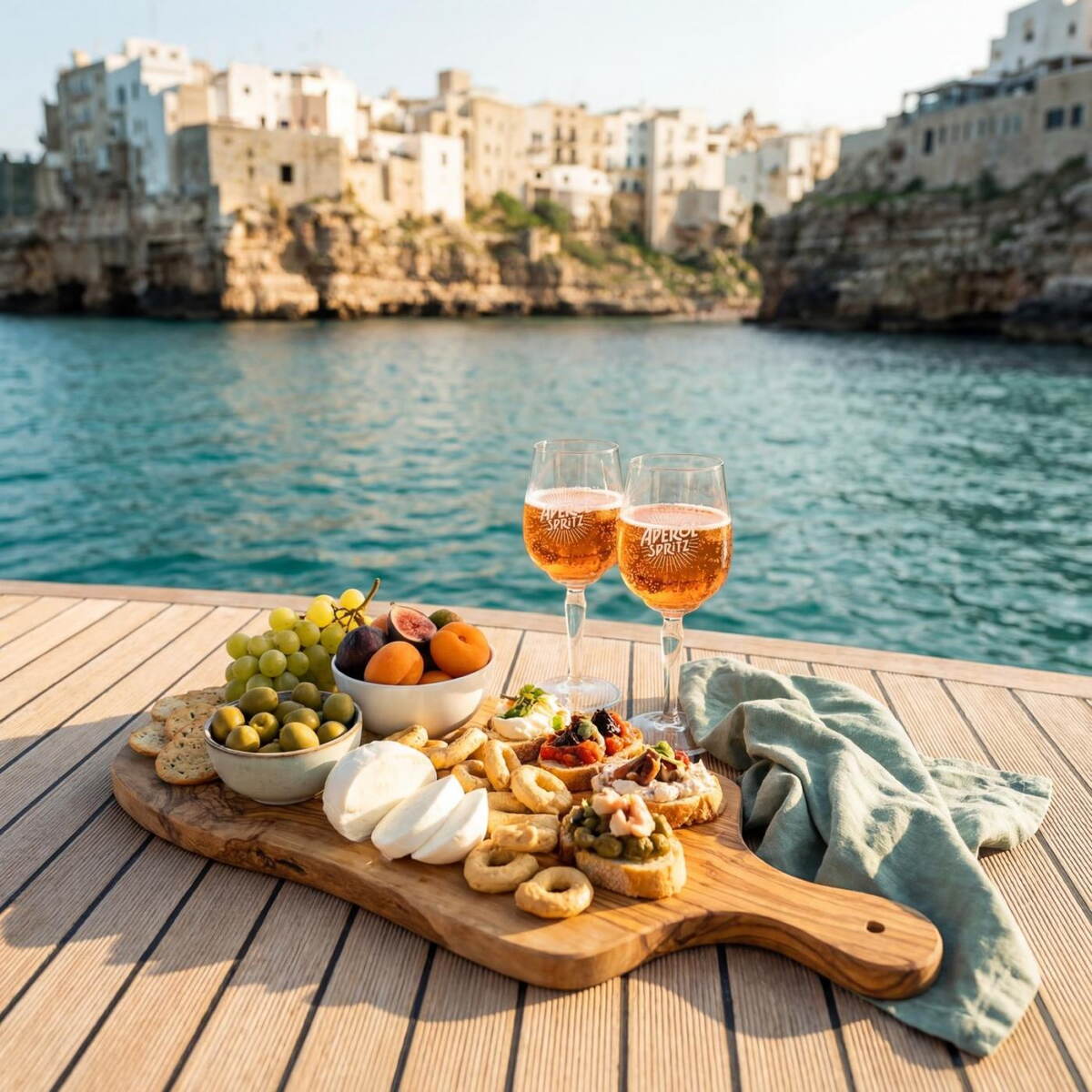
The masserie are old fortified farmsteads among the olive groves, today turned into guest houses. Here orecchiette are made by hand, burrata is eaten the day it is made, and the oil comes from trees several hundred years old.
Here luxury is a table under an olive tree and no hurry at all.
When to go
May, June and September are the best months — warm, with a pleasant sea and towns that are not crowded. October is for touring and for food. In August all of Italy is on holiday and the coast is at its busiest.
How to experience Puglia properly
Puglia is about 400 kilometres long, and the best of it lies between the towns — in the masserie, along the small roads, in the bays you see only from the water. That is exactly what we do — boutique journeys for small groups of up to eight guests. Have a look at our journey to Puglia.
Puglia — Italy as it used to be.
Frequently asked questions
Everything about travelling to Puglia
What should I see in Puglia?
The essentials are the trulli of Alberobello, Polignano a Mare, the white city of Ostuni, baroque Lecce, the rock city of Matera, Monopoli, the Itria Valley with Locorotondo, Otranto, Gallipoli, the sea caves of Salento and Castel del Monte.
How many days do you need in Puglia?
To feel the region without rushing, allow at least seven to ten days. Two bases work best — one in the Itria Valley and one in Salento.
When is the best time to visit Puglia?
May, June and September are the best months — warm, with a pleasant sea and towns that are not crowded. In August the coast is at its busiest.
Do you need a visa for Puglia?
No. Italy is part of the European Union and the Schengen area — for EU citizens a valid identity card or passport is enough. Travellers from outside the EU should check the current Schengen requirements.
The journey
Discover Puglia with us
A boutique journey through Puglia — the trulli of Alberobello, white Ostuni, Lecce and the Salento coast, for a small group of up to eight guests.
See the journey